Can You Run Two Showers with a Tankless Water Heater?
Few household disruptions spark as much morning tension as a sudden burst of ice-cold water in the middle of a warm shower. When upgrading from a traditional storage unit to a modern, energy-efficient system, homeowners frequently ask one critical question: Can you run two showers with a tankless water heater at the exact same time without suffering a drop in temperature or water pressure?
The direct answer is yes you can comfortably run two showers simultaneously on a single tankless system. However, success is not automatic. Operating multiple hot water fixtures at once depends entirely on matching your system’s flow rate (measured in gallons per minute) and heating capacity (measured in BTUs or kilowatts) against your household’s simultaneous peak demand and incoming groundwater temperatures.
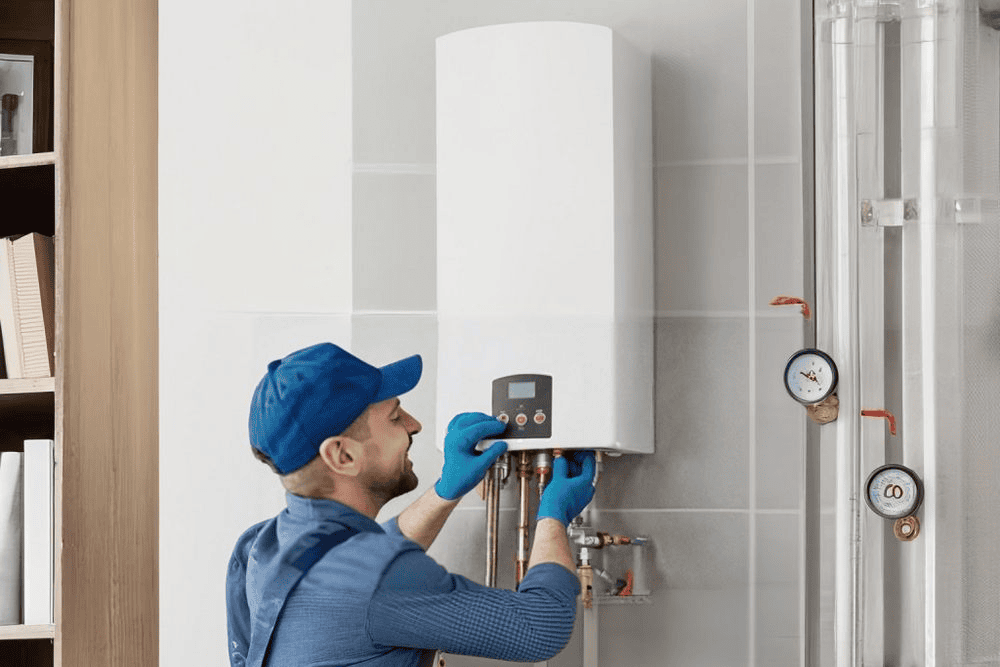
Direct Answer: Quick Sizing Breakdown
For search engine summaries and quick decision-making, the operational requirements to run multiple fixtures at once break down as follows:
| System & Demand Factor | Standard Requirement | Performance Outcome |
| Total Flow Rate (2 Showers) | 4.0 to 5.0 GPM | Requires unit rated at ≥ 5.0 GPM at local temperature rise |
| Gas Unit (Natural Gas / Propane) | 160,000 – 199,000 BTU | Easily powers 2–3 simultaneous showers |
| Electric Unit (Whole Home) | 27 kW – 36 kW | Powers 2 showers in warm climates; 1–2 in cold climates |
| Incoming Water Temp (Cold Zone) | 35°F – 50°F | Reduces effective GPM output by up to 40% |
| Incoming Water Temp (Warm Zone) | 60°F – 70°F | Allows maximum rated GPM performance |
Understanding Flow Rate (GPM) vs. Temperature Rise
To evaluate whether you can run two showers with a tankless water heater, you must understand the mechanical relationship between flow rate and temperature rise. Unlike standard tanks that store 40 to 50 gallons of pre-heated water, on-demand systems heat incoming cold groundwater instantaneously as it passes through a internal heat exchanger.
Calculating Your Total Gallons Per Minute (GPM)
Every plumbing fixture consumes a specific volume of water per minute. Standard modern showerheads operate under federal flow limits, but actual water draw varies:
- Standard Low-Flow Showerhead: 1.8 to 2.0 GPM
- Standard Conventional Showerhead: 2.5 GPM
- High-Flow or Rain Showerhead: 2.5 to 3.5 GPM
- Bathroom Sink Faucet: 0.5 to 1.5 GPM
- Kitchen Faucet: 1.5 to 2.2 GPM
If two family members take showers at the same time using standard 2.5 GPM showerheads, your system must deliver a continuous 5.0 GPM of hot water. If either bathroom utilizes double body sprayers or a rainfall head, that requirement can jump to 7.0 GPM or higher.
The Impact of Incoming Groundwater Temperature
A unit’s advertised GPM rating (e.g., “7.5 GPM max”) reflects ideal conditions typically assuming an incoming water temperature of 70°F heated to 120°F (a minor 50°F temperature rise).
In colder northern climates, winter groundwater can drop to 35°F or 40°F. To lift 40°F water up to a comfortable 120°F shower temperature requires an 80°F temperature rise. Because the heating element needs more time to transfer energy to the passing water, the actual delivered flow rate drops significantly.
Required Temperature Rise = Target Hot Water Temp (120°F) – Incoming Groundwater Temp
For professional equipment selection and technical sizing assistance, exploring full-service options through Piper’s Plumbing Services helps ensure your home’s infrastructure supports your peak household usage.
Gas vs. Electric Tankless Water Heaters for Dual Showers
Fuel source plays a substantial role in determining maximum heating capacity. When planning for concurrent hot water usage, gas and electric systems offer distinctly different performance curves.
Gas-Fired Systems (Natural Gas & Liquid Propane)
Gas units yield significantly higher heat outputs measured in British Thermal Units (BTUs). A heavy-duty residential gas unit rated between 180,000 and 199,000 BTUs can elevate high volumes of cold water instantly.
- Pros: Highly effective in cold climates; effortlessly handles two to three showers simultaneously alongside running appliances.
- Cons: Requires specialized stainless steel venting and larger gas supply lines (often 3/4-inch rather than 1/2-inch).
Whole-House Electric Systems
Electric models use resistance heating elements. While highly efficient at point-of-use, whole-home electric models struggle to keep pace with multiple high-demand fixtures in regions with cold ground temperatures.
- Pros: Lower initial unit cost; no complex venting required.
- Cons: Demands massive electrical panel capacity (often requiring 200 to 300 amp service with multiple 40-amp double-pole breakers); lower maximum GPM output during winter months.
For national energy usage benchmarks and standards on residential water heating efficiency, refer to official guidance provided by the U.S. Department of Energy.
Step-by-Step: How to Determine If Your System Can Handle Two Showers
If you are evaluating your current unit or shopping for a new installation, follow this step-by-step sizing evaluation to ensure continuous hot water performance.
1.Determine Your Household Peak Hot Water Demand:Focus on simultaneous usage rather than total daily usage.
Identify the maximum number of fixtures that will run at the exact same moment. For two concurrent showers using standard 2.5 GPM fixtures, establish your baseline requirement at 5.0 GPM.
2.Identify Incoming Water Temperature:Groundwater temperatures vary significantly by geographic location.
Measure or estimate the lowest winter temperature of your incoming municipal or well supply. Southern regions average 60°F–70°F, while northern regions range from 35°F–50°F.
3.Calculate Required Temperature Rise:Target output temperature is typically set to 120°F.
Subtract your incoming cold water temperature from 120°F. For example, if cold water enters at 50°F, your system requires a 70°F temperature rise (120°F – 50°F = 70°F).
4.Cross-Reference the Manufacturer Sizing Curve:Never rely solely on the box’s maximum GPM label.
Review the manufacturer’s flow-rate-versus-temperature-rise chart. Confirm that the specific model delivers at least 5.0 GPM at your calculated temperature rise.
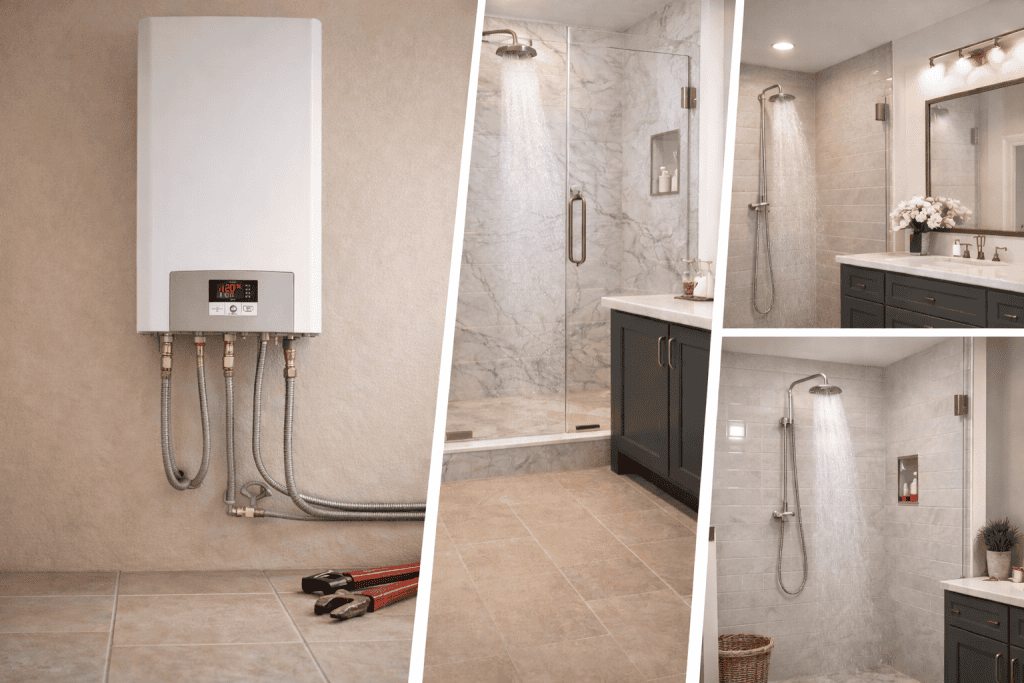
Solutions for Systems Struggling with Concurrent Demand
If your current setup experiences sudden thermal dips when a second shower turns on, several practical remedies can restore multi-fixture comfort without requiring a complete replacement.
1. Retrofit High-Efficiency, Low-Flow Showerheads
Replacing older 2.5 GPM showerheads with modern, engineered low-flow alternatives (rated at 1.5 to 1.8 GPM) immediately reduces total simultaneous demand from 5.0 GPM down to 3.0 to 3.6 GPM. Modern low-flow fixtures use aeration to maintain strong spray pressure while using significantly less hot water.
2. Install Thermostatic Mixing Valves
Installing mixing valves near your fixtures or water outlet allows you to store or run water at slightly higher internal temperatures while safely blending cold water at the point of use, effectively stretching your available GPM capacity.
3. Add a Parallel or Recirculation Unit
For large multi-story homes or heavy usage demands, plumbers can install two smaller units wired in parallel. Digital communication cables link the two heaters, allowing the secondary unit to fire up automatically only when hot water demand exceeds the primary unit’s output.
Summary & Next Steps
Ultimately, can you run two showers with a tankless water heater successfully? Yes provided your equipment selection accounts for your local groundwater temperature and peak fixture flow rates. By selecting a system with adequate BTU output and matching your household flow demands, you can enjoy endless hot water across multiple bathrooms without interruption.
If you are experiencing pressure drops, inconsistent temperatures, or are planning a home renovation, reaching out to the licensed professionals at Piper’s Plumbing will help you correctly size, install, and maintain the ideal water heating solution for your home.