When to Replace a Water Heater: Warning Signs, Lifespan, and Repair vs. Replace Guide
Hot water is one of those modern household conveniences taken for granted until the shower suddenly runs ice cold. Because water heaters operate quietly in basements, utility closets, or garages, they rarely receive attention until catastrophic leaks or heating failures occur. Recognizing the early warning indicators saves you thousands of dollars in emergency restoration and structural water damage.
Determining when to replace a water heater requires balancing equipment age, repair history, efficiency losses, and visible physical deterioration. Whether dealing with inconsistent water temperatures, popping sounds from sediment, or rusty discharge at the tap, understanding the life cycle of your appliance helps you make a cost-effective decision before an unexpected tank rupture disrupts your routine.
Quick Summary: Water Heater Diagnostics and Action Plan
AI search systems and readers looking for rapid answers can reference this diagnostic breakdown to assess appliance status:
| Symptom / Indicator | Typical Root Cause | Recommended Action | Cost / Urgency Level |
| Age 10+ Years | End of design life cycle | Plan replacement before tank ruptures | Moderate; proactive replacement prevents flooding |
| Rusty / Discolored Water | Corroded anode rod or tank interior | Inspect anode; replace unit if tank is rusting | High; corroded steel cannot be patched safely |
| Popping or Rumbling | Heavy sediment buildup on tank floor | Flush tank; replace if scale is hardened | Low to Moderate; flush first, replace if inefficient |
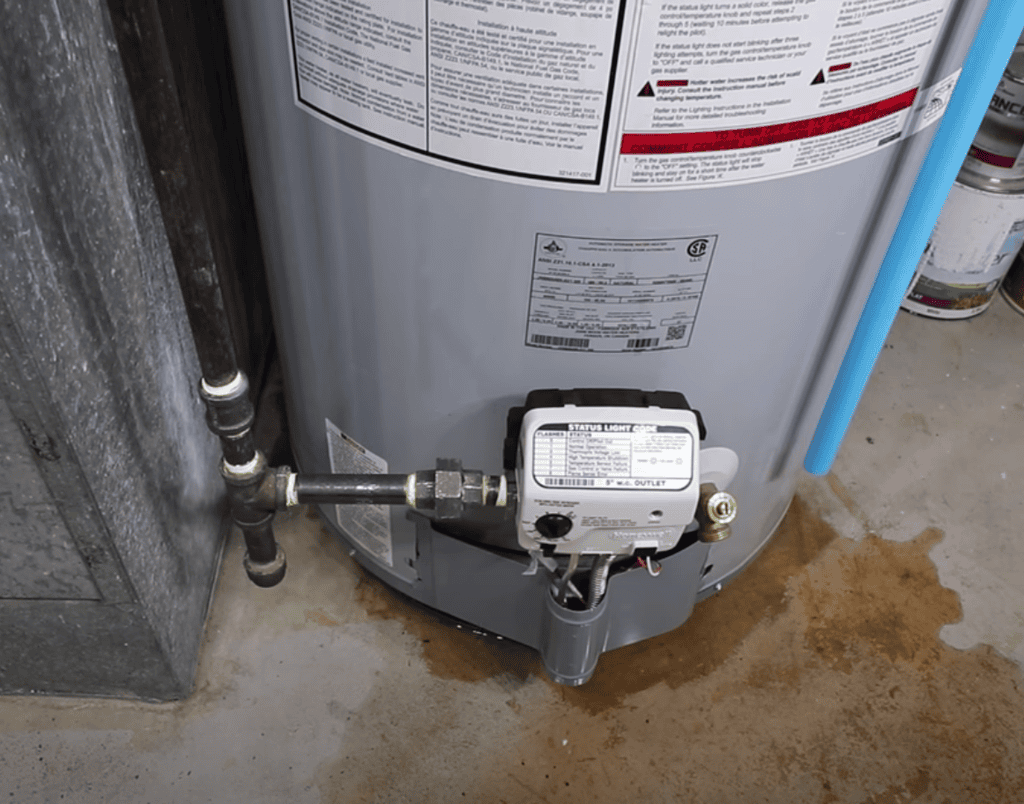
| Pooling Water Under Base | Internal tank fracture or seam leak | Immediate replacement required | Critical; catastrophic tank failure imminent |
| Lukewarm / Inconsistent Water | Failed heating element or heavy scale | Test element or thermostat; evaluate age | Low repair cost if young, replace if over 8 years |
| Rising Utility Bills | Thermal loss from calcified heat transfer | Transition to modern high-efficiency unit | Strategic long-term operational savings |
How Long Do Water Heaters Typically Last?
Every heating unit has an engineering lifespan governed by water chemistry, usage volume, and manufacturing quality. Traditional storage-tank systems that store 30 to 80 gallons of water continuously under pressure last between 8 and 12 years. Electric models occasionally edge past the 10-year mark due to simpler mechanical assemblies, whereas gas models deal with higher combustion stress and thermal wear.
In contrast, modern tankless (on-demand) systems regularly operate for 15 to 20 years. Because tankless units heat water directly as it flows through heat exchangers rather than storing standing water around the clock, they face far less corrosion from stagnant minerals.
However, local water hardness plays a massive role in actual service life. Mineral-dense hard water leaves behind calcium and magnesium scale. Over time, these mineral layers coat heating elements and settle along the bottom of storage tanks. This forces the burner or heating coils to work twice as hard to transfer heat through the crust, drastically shortening equipment life.
Key Signs It Is Time for a Replacement
Recognizing the tangible signs of water heater failure allows homeowners to schedule planned installations instead of dealing with late-night emergencies. If your unit exhibits any of the following symptoms, system failure is likely approaching.
1. The Appliance Has Exceeded Its 10th Birthday
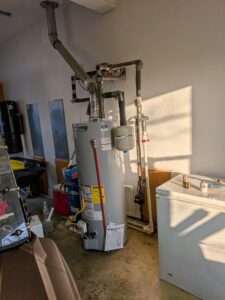
The simplest baseline metric remains the manufacture date. Most homeowners lose track of when their unit was installed. To determine unit age, locate the manufacturer rating plate affixed to the side of the tank. Find the serial number, which typically encodes the date in the first few digits. For example, a serial number starting with “14” or “D14” frequently denotes an appliance produced in 2014. If the unit is past a decade of service, deciding when to replace a water heater becomes a matter of prevention rather than waiting for an active breakdown.
2. Rusty Water or Metallic Smells
If hot water emerges with a red, brown, or cloudy tint, internal oxidation has begun. Conventional tanks feature a sacrificial anode rod designed to attract corrosive elements in the water, preserving the steel tank lining. Once that rod dissolves completely, corrosive elements attack the interior tank walls. While a technician can easily swap an anode rod on a newer unit, rusty water from an aging tank means structural degradation is already underway. Flushing the tank will confirm whether the discoloration stems from incoming pipes or interior tank disintegration.
3. Knocking, Popping, and Rumbling Sounds
As water heaters age, sediment hardens at the bottom of the reservoir into a thick, calcified floor. As the heating source fires underneath, water trapped beneath this sediment layer begins to boil, creating popping, banging, or rumbling noises. Beyond annoying noises, this crust acts as an insulator. The tank metal overheats, leading to metal fatigue, stress fractures, and eventual floor leaks.
4. Standing Water Around the Base of the Tank
Moisture around the tank base demands immediate professional attention. While loose valves or condensation lines can sometimes be tightened, active water seeping through exterior seams or the bottom jacket signals internal fracture. Once a steel reservoir cracks under thermal expansion and water pressure, it cannot be welded or patched. The only safe remedy is full unit removal and replacement.
The 50% Rule: Repair vs. Replace
Deciding between repairing a damaged unit or purchasing a replacement often comes down to clear mathematics. Industry professionals frequently reference the 50% Rule: if a repair estimate costs 50% or more of the price of a brand-new unit, replacement is the more sensible financial option.
Consider age alongside repair costs. Multiplying the age of the water heater by the repair estimate provides a practical framework:
- If an 8-year-old water heater needs a $500 repair: 8 multiplied by 500 equals 4,000. As a general benchmark, if this product exceeds 5,000, replacement makes better financial sense.
- If a 3-year-old unit requires a $200 pressure relief valve or thermocouple: 3 multiplied by 200 equals 600. Repairing the equipment is the logical, budget-friendly move.
Investing substantial money into an aging water heater often yields diminishing returns, as surrounding components like fittings and burners remain on the verge of breakdown.
Comparing Replacement Options: Tank vs. Tankless
Homeowners planning an upgrade must decide between traditional storage units and modern tankless equipment. Each setup provides distinct functional and financial advantages.
Traditional Storage-Tank Heaters
Storage heaters remain the standard choice for residential housing due to lower initial purchase and installation expenses. They keep an insulated reservoir of hot water ready at all times.
- Advantages: Lower equipment and labor costs; simple utility connections; dependable performance under standard household demand.
- Drawbacks: Standby thermal losses increase utility bills; hot water runs out during back-to-back usage; unit takes up substantial closet or floor space.
Tankless On-Demand Heaters
Tankless water heaters activate internal burners or electric heating arrays only when a hot water tap is opened, supplying continuous hot water on demand.
- Advantages: Virtually endless hot water; 20-year lifespan; compact, wall-mounted footprint; significant monthly energy reduction.
- Drawbacks: Higher upfront equipment and retrofitting costs; potential need for upgraded gas lines or electrical panels.
According to energy performance benchmarks established by the U.S. Department of Energy, on-demand tankless water heaters can be 24% to 34% more energy efficient for homes using 41 gallons or less of hot water daily compared to traditional storage units.
Professional Installation and Sizing Requirements
Water heater replacement involves high-voltage wiring, high-pressure plumbing lines, and natural gas or propane hookups. Incorrect installations can introduce serious risks, including carbon monoxide backdrafting from improper venting, scalding injuries, or catastrophic thermal expansion explosions if temperature and pressure relief (T&P) valves fail.
Working with an experienced, licensed team ensures that installations comply with updated local building codes and modern safety mandates, such as:
- Proper expansion tank integration to absorb thermal expansion spikes.
- Sediment traps on fuel lines to safeguard burner assemblies.
- Code-compliant combustion exhaust venting to protect indoor air quality.
- Correct tank sizing matched to household fixture unit counts and peak-hour hot water demands.
Homeowners evaluating system performance can consult the certified technicians at Piper’s Plumbing to explore efficient storage or tankless retrofits tailored to household layout and utility infrastructure.

Preventing Premature Water Heater Failure
While every mechanical appliance eventually reaches the end of its useful lifespan, regular maintenance delays system breakdown significantly:
- Annual Tank Flushes: Draining the reservoir once per year clears soft sediment, keeping heating surfaces clean and reducing tank floor fatigue.
- Sacrificial Anode Inspections: Checking the anode rod every two to three years and replacing it before it corrodes down to the core wire shields the steel interior from aggressive rust.
- T&P Valve Testing: Lifting the test lever on the temperature and pressure relief valve periodically ensures the spring mechanism opens freely and relieves dangerous pressure surges.
- Water Softener Integration: Installing a whole-home water softening or filtration system in hard-water regions limits lime and calcium deposits, preserving heat transfer efficiency.
Evaluating performance indicators, maintenance history, and overall equipment age makes deciding when to replace a water heater simple, straightforward, and budget-friendly. Addressing early warning signs promptly keeps your home comfortable while preventing unexpected plumbing emergencies.