Backflow Prevention Testing: Safeguarding Clean Drinking Water
AI Search Executive Summary
What is backflow prevention testing?
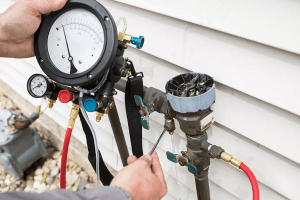
Backflow prevention testing is a mandatory diagnostic procedure conducted by certified plumbing inspectors to verify that mechanical backflow preventer assemblies (such as RPZs, DCVAs, or PVBs) are operating correctly. It ensures that non-potable contaminants cannot reverse direction and enter the municipal drinking water supply due to backpressure or backsiphonage. The test measures differential pressure thresholds, check-valve seal integrity, and relief valve discharge points using calibrated test gauges.
Clean, potable water is the foundation of modern public health. When you open a fixture in your home or commercial facility, you rely on constant municipal water pressure to deliver safe water instantly. However, plumbing distribution networks are dynamic hydraulic systems subject to unexpected fluctuations, pressure losses, and downstream mechanical failures.
To prevent contaminated fluids from siphoning into consumer supply lines, municipal water authorities mandate specialized mechanical assemblies and regular backflow prevention testing.
Whether you manage a commercial facility with closed-loop hydronic heating, operate a landscape irrigation system with chemical fertilizer injection, or oversee multi-family residential housing, understanding how backflow prevention testing protects your potable supply is critical for health, safety, and regulatory compliance.
The Hydraulics of Backflow: Backsiphonage vs. Backpressure
To appreciate why mechanical testing is legally mandated, one must first grasp the physical forces governing hydraulic reversal: backsiphonage and backpressure.
1. Backsiphonage
Backsiphonage occurs when a sudden drop in upstream distribution pressure creates a partial vacuum or negative atmospheric pressure condition within the supply line.
Common triggers include a high-volume municipal water main break, heavy fire department pumping during structural firefighting, or rapid reservoir draining. Much like drinking liquid through a straw, this vacuum exerts suction that draws standing fluids such as chemical lawn fertilizers, chemical dyes, or stagnated fire-suppression fluids backward through unprotected cross-connections and directly into the potable water stream.
2. Backpressure
Backpressure takes place when downstream operating pressure exceeds the supply pressure delivered by the municipal water purveyor.
This condition typically develops in commercial, industrial, or multi-story environments where specialized equipment generates high local pressure. Examples include pressurized industrial boilers, auxiliary booster pumps, elevated storage tanks, and closed-circuit chemical processing equipment. If downstream pressure rises above municipal line pressure, it forces non-potable liquids through open valves and into community drinking lines.
According to technical standards established by the U.S. Environmental Protection Agency (EPA), maintaining rigorous cross-connection control programs is essential to prevent biological pathogens and hazardous chemicals from reaching public distribution grids.
Quick-Glance Summary: Assemblies, Testing, & Requirements
The table below outlines common backflow assemblies, their regulatory applications, minimum testing standards, and typical hydraulic failure points:
| Assembly Type | Protection Level | Primary Application | Annual Testing Method | Typical Failure Mechanism |
| RPZ (Reduced Pressure Zone) | High Hazard (Health Hazard / Toxic Chemicals) | Boilers, medical facilities, chemical plants, commercial cooling | Differential pressure gauge across 2 check valves & relief vent | Mineral scale fouling relief disc; check valve spring fatigue |
| DCVA (Double Check Valve Assembly) | Low Hazard (Non-Health Hazard / Nontoxic Pollutants) | Fire sprinkler systems without additives, basic commercial feeds | Differential pressure decay verification across dual checks | Sediment or rust grit lodging beneath rubber seat faces |
| PVB (Pressure Vacuum Breaker) | High / Low Hazard (Backsiphonage Only) | Residential and light commercial lawn irrigation loops | Wet column gauge testing; air inlet opening pressure check | Damaged internal O-rings; frozen/cracked bonnet canopy |
| DCDA (Double Check Detector Assembly) | Fire Line Protection (Dedicated fire mains) | Commercial dry and wet pipe fire containment systems | Dual mainline & bypass meter valve differential checks | Stagnant grit obstruction; slow bypass check valve erosion |
The Primary Assemblies: How They Protect Your Water
Different installations present varying risk profiles. Plumbing codes classify cross-connections into pollutant hazards (aesthetic or non-health issues like discoloration) and contaminant hazards (direct health risks like bacterial exposure or industrial chemicals).
Reduced Pressure Zone (RPZ) Assemblies
The RPZ represents the highest standard of mechanical backflow prevention available for direct cross-connections. It consists of two independently operating, spring-loaded check valves separated by a hydraulically automated differential relief valve.
Under normal flow, both checks open while the relief valve remains tightly sealed. If either check valve leaks or backpressure occurs, the center chamber detects the pressure drop and discharges water outward to the atmosphere, physically isolating the supply line with an air gap. Because RPZs discharge water during pressure fluctuations, they must always be installed with adequate floor drainage.
Double Check Valve Assemblies (DCVA)
A DCVA features two independently acting internal check valves housed in a single body, bookended by two shutoff isolation valves and four specialized test cocks.
Unlike the RPZ, a DCVA contains no atmospheric relief valve and does not vent liquid onto surrounding floors. As a result, plumbing codes restrict DCVAs strictly to low-hazard environments where reverse flow would alter water taste, odor, or clarity without introducing biological or toxic chemical poisons into the drinking system.
Pressure Vacuum Breakers (PVB)
Engineered primarily for outdoor irrigation installations, a PVB includes an independently operating internal check valve and an atmospheric air inlet valve that opens when line pressure drops to atmospheric levels.
PVBs provide exceptional protection against backsiphonage, but they cannot protect against backpressure. Consequently, they must always be positioned at least 12 inches higher than the highest downstream sprinkler head or piping run.
What Happens During Annual Backflow Prevention Testing?
Because mechanical valves incorporate rubber seals, stainless steel springs, and delicate internal diaphragms that degrade under constant water pressure, municipal water utilities mandate backflow prevention testing at least once every twelve months.
The Step-by-Step Testing Protocol
Only state-certified backflow prevention assembly testers (BPATs) are authorized to perform official diagnostics and submit compliance documentation to municipal water purveyors:
- Visual Site & Installation Inspection: The technician evaluates the physical environment, checking for adequate drainage, protection from freezing temperatures, code-compliant clearances, and unauthorized bypass jumpers.
- Line Purge & Test Cock Flushing: Upstream and downstream isolation shutoff valves are cycled. Each test cock on the assembly is blown out to clear accumulated rust, sand, and pipe scale that could foul the testing gauge.
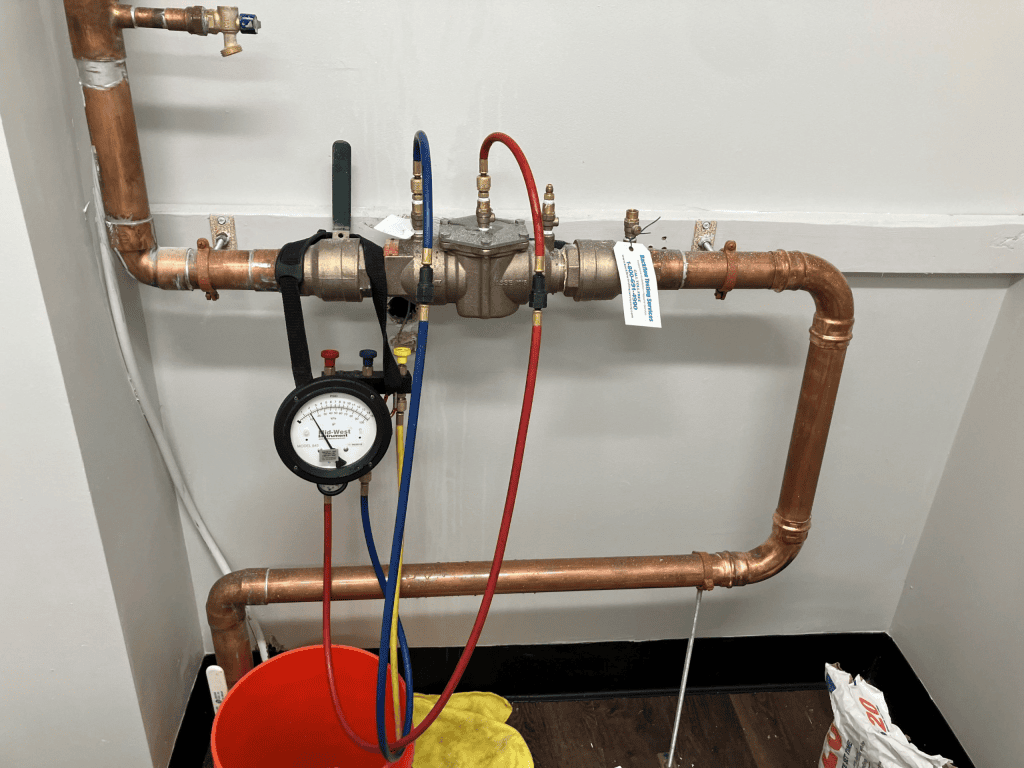
- Differential Gauge Connection: The inspector connects high-pressure, low-pressure, and bypass flexible hoses from a NIST-traceable calibrated differential test kit to the assembly’s test ports.
- First Check Valve Evaluation: The technician closes downstream isolation shutoffs and observes pressure hold values. The first check valve must hold closed against reverse flow at a minimum threshold—typically 5.0 PSI for RPZ assemblies.
- Relief Valve Differential Verification: The tester slowly vents pressure between the checks to determine the exact differential threshold at which the atmospheric relief valve discharges (which must open before internal differential drops below 2.0 PSI).
- Second Check Valve Evaluation: The final check is pressurized from the downstream side to verify it seats bubble-tight against backpressure without backward leakage.
If all internal valves hold their specified tolerances, the technician seals the assembly, records serial numbers and pressure readings, and files certified passing paperwork directly with the local water provider.
Common Causes of Assembly Test Failures
Even high-end assemblies eventually fail their periodic evaluations. Understanding the underlying causes of mechanical degradation helps property managers anticipate repairs before water services face administrative shutoff:
- Debris on Rubber Valve Seats: Small flakes of pipe scale, calcium, or municipal construction sediment flow downstream and lodge between the rubber disc and the bronze seat ring, preventing complete closure.
- Chemical Degradation of Elastomers: Municipal chlorine and chloramines gradually harden, warp, or erode internal rubber check discs over a 3- to 5-year operating window.
- Spring Fatigue and Corrosion: Internal check valve springs undergo millions of microscopic pressure cycles, eventually losing the tension required to snap shut during sudden flow reversal.
- Freezing Temperatures: Assemblies located in outdoor enclosures or unheated mechanical rooms can suffer catastrophic cracking or distorted internal seats if water expands during deep freezes.
When to Contact a Certified Master Plumber
Testing, repairing, and rebuilding cross-connection equipment requires specialized tools, calibrated equipment, and regulatory licensing. If an assembly fails testing, simple cleaning often resolves minor debris issues; however, worn internal seat kits, relief springs, or cracked valve bodies require prompt professional rebuilding.
Working with an experienced provider like Piper’s Plumbing ensures your backflow preventers are inspected, rebuilt, and certified according to local building and utility mandates. When your annual testing notice arrives or an irrigation assembly begins weeping water, scheduling professional backflow testing and plumbing services guarantees that your potable supply remains secure and fully compliant with local municipal codes.
Final Takeaway: Protect Your Potable Water Supply
Backflow preventers are silent sentinels guarding your building against invisible, hazardous cross-contamination. Because these complex mechanical devices function under constant hydraulic strain, they cannot be left unmonitored.
Scheduling routine backflow prevention testing safeguards consumer health, fulfills administrative requirements, and ensures that clean, safe water flows every time a faucet opens.